
Amount of urban space required to transport sixty people by 1) automobile 2) bus and 3) bicycle.
via Press Office, City of Münster, Germany
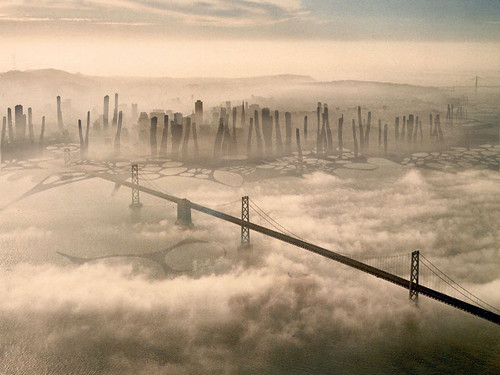 Come 2108, the built typology of San Francisco is barely recognizable. The edge of the bay has been transformed into a series of algae ponds producing hydrogen for clean fuel cell locomotion. A network of interlinked subterranean infrastructural pathways transport people, hydrogen, water and staples while freeing the surface for pedestrian comfort and disinvestment in the internal combustion engine.
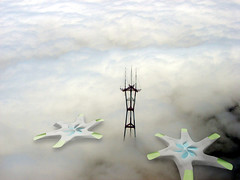 Fog is harvested for drinking water and streets become permeable rainwater collectors, while natural aquifers are used as water storage tanks. The complex plate tectonic machinations underpinning the City are tapped to supply clean geothermal energy, and the Pacific ocean is utilized as the largest thermal mass on the planet.
 The State of Israel will model its program on modern mobile phone usage: first, provide users with discounted hardware. This "discount" will take the form of huge tax breaks in a country where fees surpass 60% of the cost of a new car. Second, offer usage "plans" which are not directly linked to the volatile price of natural resources, with overage charges for citizen who overstep their predicted usage.
 Now local developers are trying to green their image by funding the world's first Vertical Farm. A concept that's been pushed for years by the Vertical Farm Project, this structure stands 30 stories tall within the core of an urbanized area. The entire structure is dedicated to food production year-round and weather independent; cash crops can be produced locally by replicating their native biomes within the structure's controlled environments. All told, between 50 and 75 thousand people could be fed by a single Vertical Farm.
 Cash flow from produce alone would pay off the high ($200 million) construction cost within 8 years; projected tourism revenue would make the tower every bit as profitable as a casino, and add a smidge of sustainability to Nevada's largest oasis.
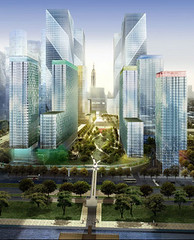 Buried on the West side of Manhattan between the Lincoln Tunnel and the Chelsea Parks, there lies a rare undeveloped brownsite in the heart of New York City --- the 26-acre Hudson Rail Yards. When last I visited NYC, I walked this stretch of the West Side Highway on my way from the Upper West side to a friend's place in Chelsea (yes, avid doesn't describe my approach to walking). The streets were wide and deserted, the buildings industrial and decaying, the parking lots more numerous than anywhere else on the Island I had been before or since. I remember feeling more than a little bit afraid for my welfare.
 Bounding this project to the West is the the old High Line, site of a new deconstructionist conflation of parkland and industrial viaduct to be undertaken by Diller Scofidio and Renfro. Can't wait to visit this area again in ten years...may be a pretty hot little place if it keeps going at this rate.


